A Warm Outlet Is a Warning Sign You Shouldn't Ignore
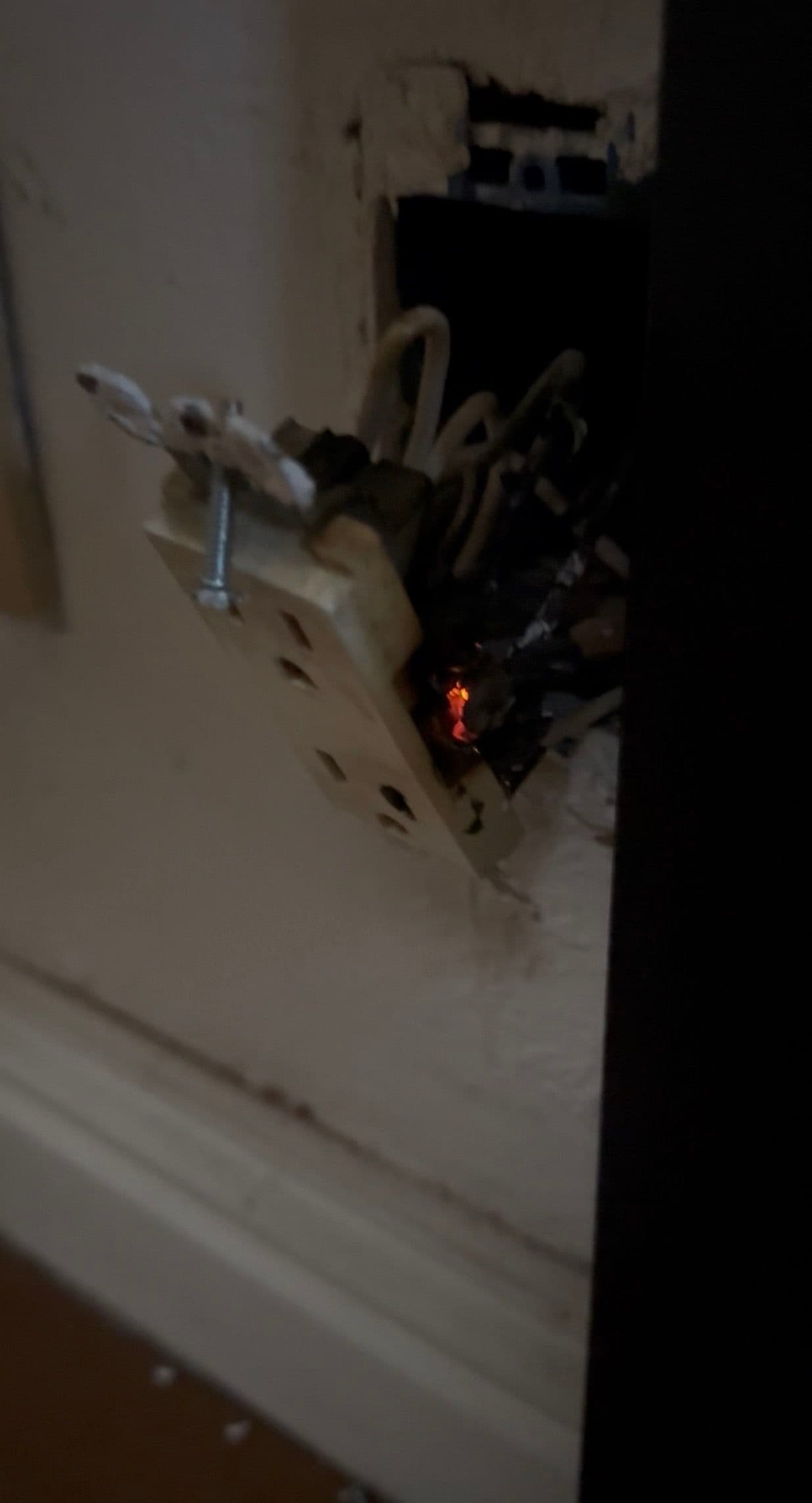
That glow you're seeing behind the outlet is active arcing - an electrical connection that has failed and is generating heat. This is one of the most common ways house fires start, and the scary part is that it can be happening inside your walls without any obvious warning. By the time an outlet feels warm to the touch or starts showing discoloration, the damage is already underway.
Most people don't think twice about an outlet until something stops working. But a loose or corroded connection doesn't just cause inconvenience - it creates resistance in the circuit, and resistance generates heat. Over time, that heat builds up inside the box, scorches the wiring, and can ignite surrounding materials. It's a slow problem that turns dangerous fast.
The signs are usually there if you know what to look for. Outlets that feel warm, plugs that sit loose in the receptacle, flickering lights on the same circuit, or any kind of discoloration or burning smell near a wall plate - these are all red flags. None of them are normal, and none of them should be brushed off.
This is exactly the kind of thing we find during electrical safety inspections. We go through the outlets, connections, and wiring in your home to catch issues before they become emergencies. When something like this turns up, we handle the outlet repair on the spot and make sure the surrounding wiring is safe before we leave.
You don't have to wait for a tripped breaker or a burning smell to call us. If something feels off - even slightly - that's worth a look. Catching these problems early is what keeps a minor repair from turning into a much bigger situation.